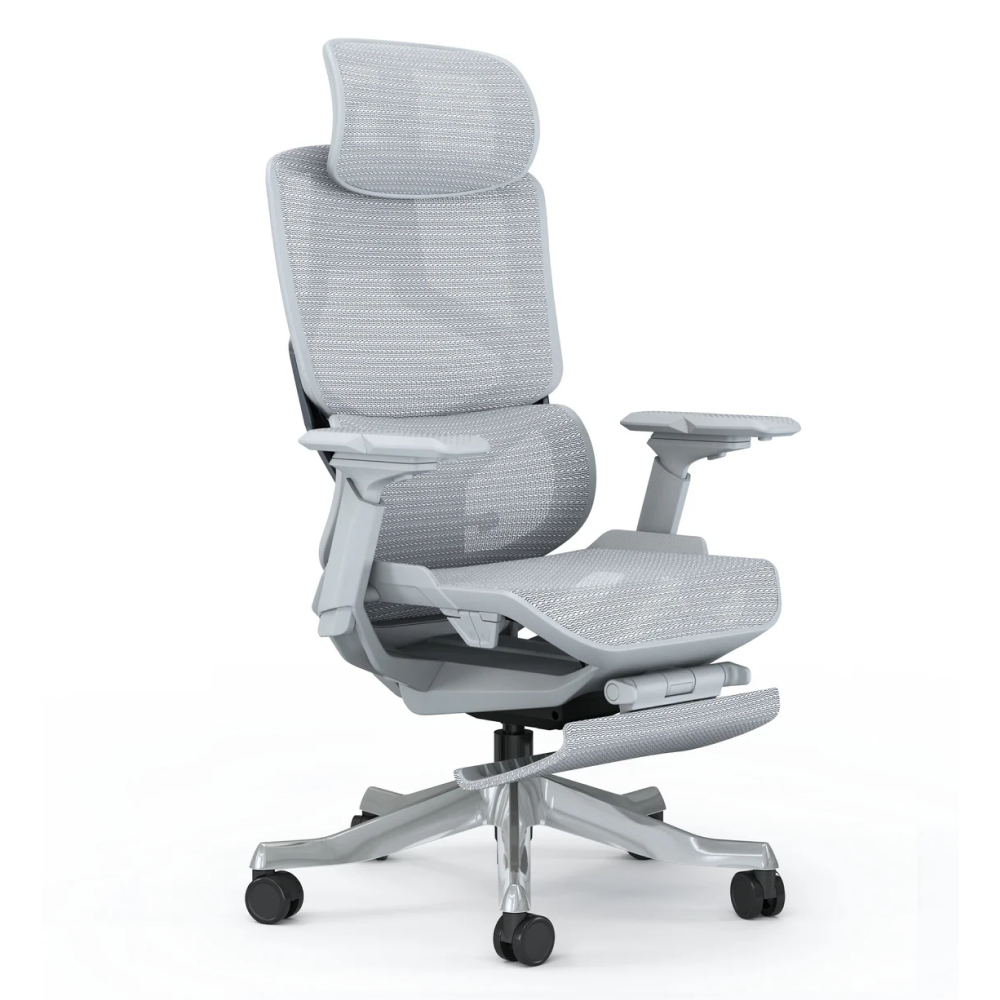
The office chair mechanism is what lets the chair move with you, and it is the feature most worth understanding before you buy. The main types — basic tilt, synchro-tilt and multiblock — differ in how the seat and back recline. This guide explains each in plain terms.
Key takeaways
- The mechanism controls how the chair reclines, which is what lets you change posture through the day.
- Basic tilt rocks the whole seat and back together from a pivot — simple, but lifts your feet.
- Synchro-tilt reclines the back more than the seat in a natural ratio — the one most worth paying for.
- Multiblock adds lockable positions and finer control for tailoring the recline.
- Look also for tilt tension (set to your weight) and lock positions to hold the recline where you want.
Why the mechanism matters
Of all a chair's features, the mechanism is the one that decides whether it is comfortable over a full day, because it governs movement. Sitting still in one position for hours stiffens the back regardless of how well-padded the chair is; a good mechanism lets you recline and shift posture naturally, which is what keeps you comfortable. This is why, when comparing chairs, the mechanism deserves more attention than the padding or the look.
The confusion is that mechanisms are described in jargon — synchro, multiblock, tilt tension — that sells chairs without explaining them. Cut through it and there are a few types that matter and a few adjustments to check. Understanding them turns the mechanism from a spec-sheet mystery into the clearest signal of whether a chair will suit all-day use. You can shop office chairs with the mechanisms described here.
Basic tilt
The basic tilt is the simplest mechanism. The whole seat and backrest tilt back together as one unit, pivoting from a point under the seat — like a rocking chair. It lets you lean back, and for light or occasional use it is perfectly adequate.
Its limitation shows over a full day. Because the seat tilts with the back, reclining lifts your feet off the floor and raises the front of the seat under your thighs, so you cannot recline much while staying grounded and working. For a chair used a few hours a day it is fine; for all-day desk work it is the entry point, and most people are better served by a synchro-tilt. Knowing a chair has "only" a basic tilt tells you where it sits in the range.
Synchro-tilt
The synchro-tilt is the mechanism most worth paying for, and the one to look for in an all-day chair. Instead of moving the seat and back together, it reclines the backrest more than the seat — typically in around a 2:1 or 3:1 ratio. That means as you lean back, the back supports you while your feet stay flat on the floor and your thighs stay level, so you can recline and keep working rather than being tipped back.
This natural recline is what lets you change posture through the day without leaving your desk, which is the whole point of a moving chair. Combined with tilt tension set to your weight, a synchro-tilt lets you lean back for a call or a think and return to upright easily, all while staying grounded. If a chair is for full working days, a synchro-tilt mechanism is close to essential — it is the feature that most separates a chair you are comfortable in at 5pm from one you are not.
Multiblock and lockable positions
The multiblock mechanism builds on synchro-tilt with more control. It adds multiple lockable recline positions — so you can fix the chair at several points through its range, not just upright or free-floating — and often finer adjustment of the tilt behaviour. For someone who wants to tailor exactly how and where the chair reclines, or to lock it at a specific angle for a task, a multiblock offers that precision.
Whether you need it depends on how you work. Many people are perfectly served by a good synchro-tilt with a single lock; a multiblock is the upgrade for those who want to dial in multiple positions. It is a genuine step up in control rather than marketing, but it is not essential for everyone. Weigh it by whether you will actually use the extra positions — if you will, it is worth it; if you would set it once and forget it, a synchro-tilt is enough.
The adjustments to check alongside the mechanism
Two adjustments work with the mechanism and are worth checking on any chair.
- Tilt tension. This sets how much force it takes to recline, and it should be adjustable to your weight. Set too stiff, a lighter person cannot recline; set too loose, a heavier person tips back too easily. Adjustable tilt tension makes the recline feel right for you.
- Tilt lock / positions. A lock lets you hold the recline where you want it — fully upright for focused work, or at an angle for a break. A single lock is enough for most; multiple positions (from a multiblock) give more choice.
| Mechanism | Recline | Best for |
|---|---|---|
| Basic tilt | Seat + back together | Light / occasional use |
| Synchro-tilt | Back more than seat | All-day desk work |
| Multiblock | Synchro + multiple locks | Those who want fine control |
Read this together with the mechanism type: the mechanism sets how the chair reclines, and tilt tension and lock let you tune and hold that recline. A chair with a synchro-tilt, weight-set tension and a lock covers what most people need for comfortable all-day sitting.
From the field: matching the mechanism to how you sit
The chairs people find comfortable over years almost always have a mechanism suited to how they sit. For full working days at a desk, that means at least a synchro-tilt with adjustable tilt tension — the combination that lets you recline naturally, stay grounded, and set the resistance to your weight. For lighter use, a basic tilt is fine and there is no need to pay for more. For those who want to fine-tune, a multiblock earns its place.
The mistake is ignoring the mechanism and buying on padding or looks, then finding the chair locks you upright or tips you back awkwardly. Since the mechanism is what enables the posture changes that keep you comfortable, it is the wrong thing to overlook. Decide how you sit — all day or occasionally, upright or reclining — and match the mechanism to it. Our ergonomic chair buying guide puts the mechanism in the context of the other features to check.
Chair mechanism checklist
- All-day desk work → at least a synchro-tilt mechanism
- Light or occasional use → a basic tilt is adequate
- Want fine control of recline positions → consider multiblock
- Adjustable tilt tension, set to your weight
- A tilt lock to hold the recline where you want it
- Judge the mechanism over the padding when comparing chairs
FAQ
What is a synchro-tilt mechanism? A synchro-tilt reclines the backrest more than the seat — typically in about a 2:1 or 3:1 ratio — so as you lean back, the back supports you while your feet stay flat on the floor and your thighs stay level. This natural recline lets you change posture and keep working, which is why it is the mechanism most worth paying for in an all-day office chair.
What is the difference between tilt and synchro-tilt? A basic tilt rocks the whole seat and backrest together from a single pivot, so reclining lifts your feet and raises the seat front — fine for light use but limiting for all-day work. A synchro-tilt moves the back more than the seat, so you can recline while staying grounded and working. For full working days, a synchro-tilt is the better choice.
Do I need a multiblock mechanism? Only if you want fine control. A multiblock adds multiple lockable recline positions and finer tilt adjustment on top of a synchro-tilt, which suits people who want to dial in and lock several positions. Many people are well served by a good synchro-tilt with a single lock. Choose a multiblock if you will actually use the extra positions; otherwise a synchro-tilt is enough.
What is tilt tension on an office chair? Tilt tension sets how much force it takes to recline the chair, and it should be adjustable to your weight. Set too stiff, a lighter person cannot recline comfortably; set too loose, a heavier person tips back too easily. Adjustable tilt tension lets you tune the recline so it feels right for you, and it works alongside the tilt mechanism itself.
Which chair mechanism is best for all-day use? A synchro-tilt with adjustable tilt tension and a tilt lock is the combination that suits all-day desk work. It lets you recline naturally while staying grounded, set the resistance to your weight, and hold the recline where you want it. A multiblock adds finer control if you want it, but a good synchro-tilt covers what most people need for comfortable long sitting.
Related guides
- Office Furniture Procurement Guide for the UAE
- How to Read Office Chair Specifications
- Office Chair Prices in the UAE
Choose the right mechanism. Shop office chairs with a synchro-tilt for all-day use, or read the ergonomic chair buying guide.