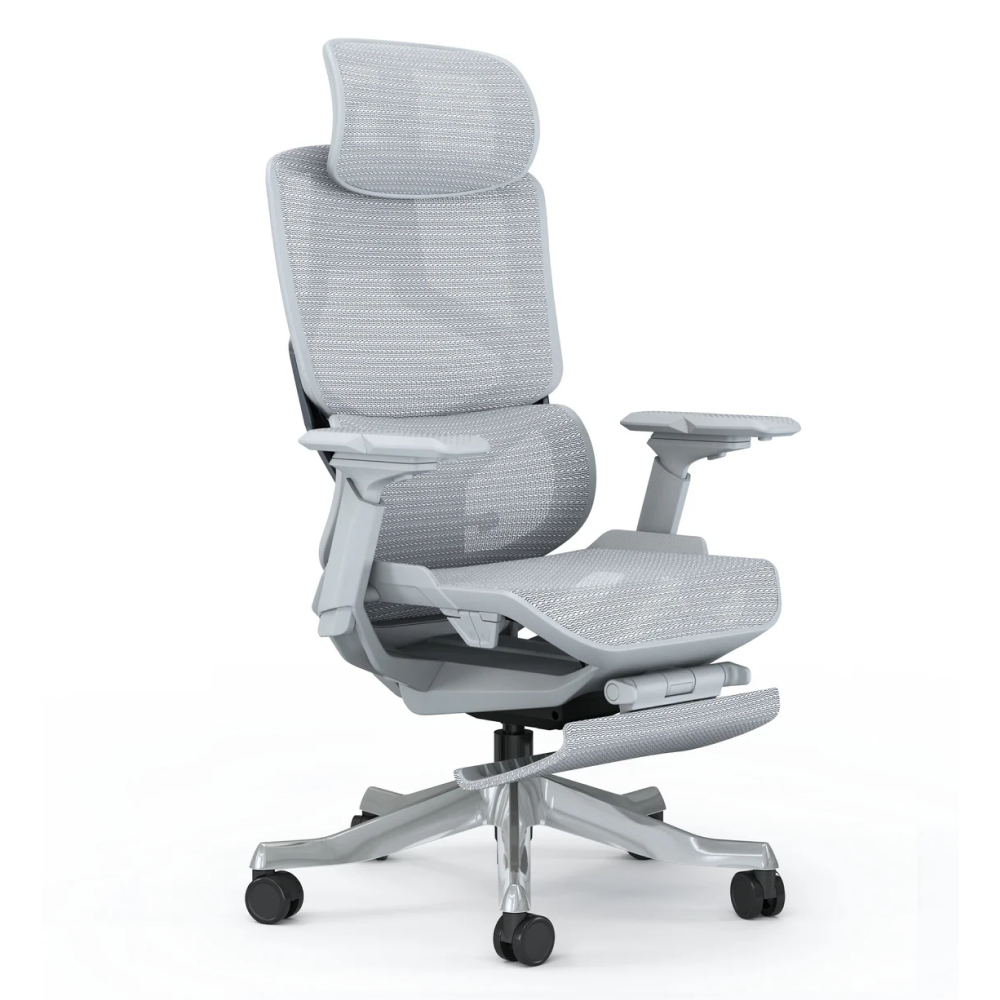
An office chair's specifications tell you, on paper, whether it will last. The ones that matter are the test standards (BIFMA, EN 1335), the gas cylinder class, the seat dimensions and the weight rating. Read those correctly and you can tell a durable chair from a fragile one before anyone sits in it.
Key takeaways
- Test standards — BIFMA and EN 1335 — tell you the chair was engineered and tested to a recognised benchmark.
- The gas cylinder class governs the lift mechanism's safety and durability; a rated cylinder matters.
- Seat height range (roughly 400–510 mm) and seat depth decide whether the chair fits your people.
- The weight rating must comfortably exceed the heaviest intended user, with margin.
- Specs describe potential; adjustability you will actually use is what turns a good spec into a comfortable chair.
Why the datasheet matters
When you buy chairs for an office rather than for yourself, you cannot sit in every option, and photos tell you almost nothing about durability. The datasheet is where a chair reveals whether it was engineered to last or built to a price. Two chairs that look identical can carry very different specifications, and the gap shows up a year later as a failed mechanism on one and a chair still going strong on the other.
Reading the datasheet is therefore a purchasing skill, not a technicality. It lets you compare chairs on the same objective basis, hold a supplier to a written standard, and avoid the false economy of a chair that photographs well and fails early. The rest of this guide walks through the fields that matter and what each one is telling you. You can browse office chairs alongside this to see the specs in context.
Test standards: BIFMA and EN 1335
The most important lines on a datasheet are the standards the chair is tested to, because they tell you it was engineered against a recognised benchmark rather than assembled to hit a price.
- BIFMA is the US furniture industry's set of test standards, covering strength, stability and durability. A chair tested to BIFMA has been put through defined load and cycle tests rather than just looking sturdy.
- EN 1335 is the European standard for office work chairs, defining dimensions (in three type categories) and safety and strength requirements. It speaks directly to whether a chair's proportions and construction meet an established norm.
A chair that cites these standards has a durability claim you can lean on; one that cites none is asking you to trust the photo. Note the difference between "tested to" and "compliant with" wording, and if durability is critical for your use, ask the supplier which specific tests were applied. Standards are the closest a datasheet gets to a guarantee that the chair will survive real office use.
The gas cylinder: the class that matters
The gas cylinder is the part that raises and lowers the seat, and it is under load every time someone sits down, so its quality is a real durability and safety factor. Datasheets often state a cylinder class — a rating of the cylinder's construction and testing. A properly rated cylinder is built to take repeated loading over years; a cheap, unrated one is a common failure point and, at worst, a safety concern.
When you read this field, treat a stated, rated cylinder as a positive signal and its absence as a question to ask. For an office where chairs are used all day, every day, the cylinder is not a detail — it is one of the parts most likely to fail first if it was the corner cut to hit a price. A datasheet that specifies the cylinder is telling you the maker took that part seriously.
Seat dimensions and adjustment ranges
The dimensions decide whether the chair fits the people who will use it, which matters more across a diverse office than any single comfort claim.
| Spec | What to look for |
|---|---|
| Seat height range | Roughly 400–510 mm, to suit short and tall users |
| Seat depth | Enough that there is a small gap behind the knees when seated back |
| Backrest height | Supports the lower and mid back |
| Armrest adjustment | Height-adjustable arms that tuck under the desk |
The seat height range is the key figure, because it determines whether one chair model can serve a team of different heights. A range around 400–510 mm covers most adults; a narrow range means the chair fits fewer people and forces some to work at the wrong height all day. Seat depth matters for taller and shorter users alike, and adjustable arms take load off shoulders. Read these numbers against the people who will actually sit in the chairs, not against an average.
Weight rating and build
The weight rating tells you the maximum user weight the chair is tested to support, and it should comfortably exceed your heaviest intended user with margin to spare — a chair used at the edge of its rating all day will wear faster and is a safety consideration. A higher rating usually also signals a stronger base, cylinder and frame overall.
Look too at the base material where the datasheet states it. A nylon or aluminium five-star base is stronger and more stable than a lighter alternative, and the number of castors and the base diameter affect stability. These are the structural specs that, together with the standards and cylinder, separate a chair built for years of daily use from one built to look the part briefly. Where the datasheet is vague on build, that vagueness is itself information — a maker proud of the construction states it, and a maker cutting corners tends to stay quiet about exactly where.
The UAE angle: specs for daily, all-climate use
In a UAE office, chairs are used intensively and continuously, so the durability specs — standards, cylinder class, weight rating, build — carry extra weight. A chair that would last in light use can fail early under all-day loading, and the datasheet is where you catch that before you buy a hundred of them. For breathability, check whether the back is mesh, which matters for comfort across a full working day in the local climate, though that is a comfort spec rather than a durability one.
The practical UAE takeaway is to weight the durability specifications heavily when buying at volume. Replacing chairs early across a whole office is expensive and disruptive, so the small effort of reading the datasheet — confirming a recognised standard, a rated cylinder, an adequate weight rating and a solid base — pays back across the life of the purchase. Pair the datasheet check with the two-year warranty a quality chair typically carries, and you have both a paper and a contractual signal of durability.
From the field: reading specs against real use
The buyers who use datasheets well read them against how the chairs will actually be used, not as an abstract score. They start from the people and the use — all-day task work, a range of body sizes, a warm climate — and then check the specs that serve that use: a seat-height range wide enough for the team, a rated cylinder and recognised standard for daily durability, a weight rating with margin, and a breathable back for comfort. Specs that do not serve the use are noise.
The common mistake is the opposite: buying on a single headline feature or on looks, and discovering the datasheet had already warned of the weakness — an unrated cylinder, no standard cited, a narrow adjustment range. The datasheet rarely lies; it simply requires reading. A few minutes spent translating the numbers before a bulk order is the cheapest durability insurance available, and it is exactly the step that separates a chair fleet that lasts from one that starts failing in the second year. If you want help matching specs to your use, our ergonomic chair buying guide covers the comfort side alongside the specs.
Chair datasheet checklist
- Tested to a recognised standard (BIFMA and/or EN 1335)
- Gas cylinder class stated and rated
- Seat height range around 400–510 mm for a mixed team
- Seat depth and adjustable arms suited to your people
- Weight rating comfortably above the heaviest user
- Strong five-star base (nylon or aluminium)
- Mesh back for all-day comfort in the UAE climate
- Backed by a warranty (two years is typical for chairs)
FAQ
What does BIFMA mean on an office chair? BIFMA is the US furniture industry's set of test standards for strength, stability and durability. A chair tested to BIFMA has passed defined load and cycle tests rather than merely looking sturdy. On a datasheet it is one of the strongest durability signals, because it means the chair was engineered and verified against a recognised benchmark, not just built to a price.
What is EN 1335 for office chairs? EN 1335 is the European standard for office work chairs. It defines chair dimensions across type categories and sets safety and strength requirements. A chair citing EN 1335 has proportions and construction meeting an established norm, which is useful when comparing chairs objectively. Alongside BIFMA, it is one of the specifications worth prioritising for durability and correct sizing.
Why does the gas cylinder class matter? The gas cylinder raises and lowers the seat and is loaded every time someone sits, so it is a common failure point if the maker cut a corner there. A stated, rated cylinder class signals a cylinder built to take repeated loading over years and to meet safety requirements. An unrated or unspecified cylinder is a question to ask, especially for chairs used all day.
What seat height range should an office chair have? Look for roughly 400–510 mm of seat-height adjustment. That range lets one chair model fit both shorter and taller users, so a team of different heights can share the same chair set up correctly. A narrow range fits fewer people. Read the seat height and depth against the people who will actually use the chairs, not against an average figure.
What weight rating do I need in an office chair? Choose a rating that comfortably exceeds your heaviest intended user, with margin to spare. A chair used at the edge of its rating all day wears faster and raises a safety concern. A higher rating usually also indicates a stronger base, cylinder and frame, so it is a useful proxy for overall build quality when you are comparing chairs on paper.
Related guides
- Office Furniture Procurement Guide for the UAE
- Office Chair Prices in the UAE
- Ergonomic Office Chair Buying Guide
Read the specs, then choose. Browse office chairs with the specifications that matter for daily use, or read the ergonomic chair buying guide for the comfort side.