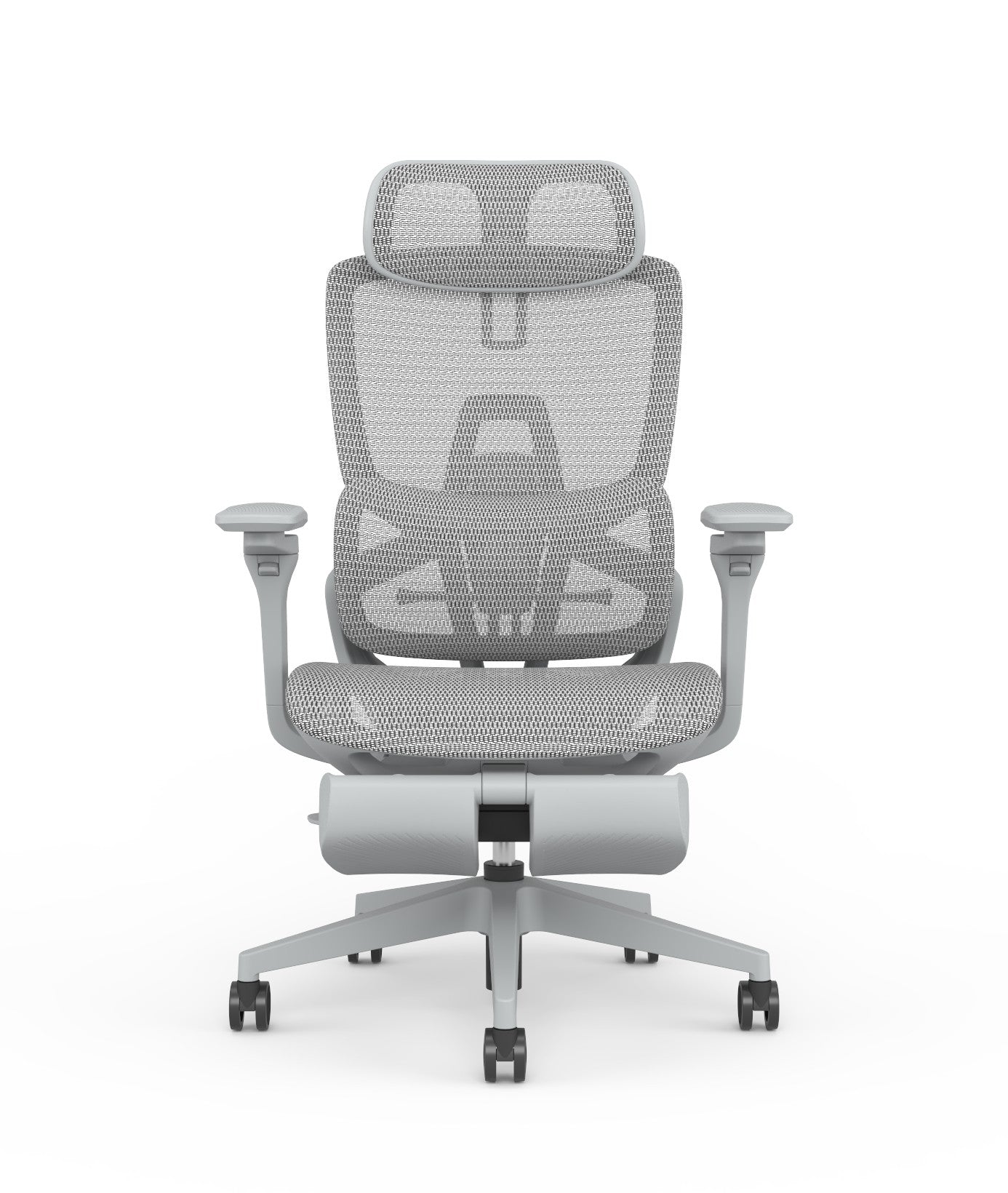
An ergonomic office chair is worth buying for one reason: you sit in it for eight hours a day, and the wrong one quietly damages your back. The features that matter are few — height, lumbar support, a synchro-tilt mechanism, a good seat. This guide separates those from the marketing.
Key takeaways
- Only a handful of features matter: seat-height adjustment, lumbar support, a synchro-tilt mechanism, seat quality and adjustable arms.
- A comfortable working chair typically sits in the AED 800–1,500 band in the UAE; below it, build quality falls away.
- Seat height should adjust across roughly 400–510 mm so the chair suits you, not the average.
- In the UAE climate, a breathable back (mesh) is worth prioritising for all-day comfort.
- Ignore the add-ons that do not move the needle — spend on the mechanism and support, not on gadgets.
What makes an office chair ergonomic?
Ergonomic is not a badge a chair earns by looking a certain way — it describes a chair that adjusts to your body and supports it through a full working day. A chair is ergonomic when you can set its height so your feet rest flat and your forearms sit level with the desk, when it supports your lower back, and when it lets you recline without tipping you out. Everything else is secondary.
That definition matters because "ergonomic" is the most over-used word in furniture marketing. A chair covered in levers can be less ergonomic than a simpler one if the levers do not adjust the things that count. The test is not how many features are listed — it is whether the chair can be set up correctly for you and stay comfortable at hour eight. The rest of this guide is the shortlist of features that pass that test.
The features that actually matter
Five things do most of the work. Get these right and the chair will serve you; miss them and no add-on compensates.
- Seat-height adjustment. The chair must rise and fall across roughly 400–510 mm so your feet are flat and your forearms meet the desk. This is non-negotiable — it is what makes a chair fit you rather than the average person.
- Lumbar support. Your lower back has an inward curve, and the chair should support it. Adjustable lumbar is better, because backs differ, but real, shaped support beats a flat backrest either way.
- A synchro-tilt mechanism. This lets the backrest and seat recline together in a natural ratio, so you can lean back through the day without your feet leaving the floor. It is the single mechanism most worth paying for.
- Seat quality. A multi-density foam seat holds its shape and comfort over years; a cheap flat foam pad compresses within months and stops supporting you.
- Adjustable arms. Armrests that set to the right height take load off your shoulders and neck. Fixed arms that sit too high or too low are worse than none.
What to ignore
Just as useful is knowing where not to spend. Several features sell chairs without improving them for most people. Elaborate headrests help only if your work has you reclining regularly; for upright desk work they are decoration. A dozen extra levers you will set once and never touch add cost and confusion, not comfort. And "gaming-style" bucket seats often trade genuine ergonomics for a look.
The pattern is simple: pay for the mechanism and the support, not for the spec-sheet length. A chair with four well-chosen adjustments you actually use will out-perform one with ten you do not. When you compare chairs, mentally strip the marketing and check only the five features above — the winner is usually clearer once you do.
Price bands: what each level buys in the UAE
Price correlates with how long a chair stays comfortable, not with how it looks. In the UAE, the useful band for a working office chair is roughly AED 800–1,500.
| Band (AED) | What you typically get |
|---|---|
| Below 800 | Basic build; foam and mechanism wear quickly |
| 800–1,500 | Real lumbar support, synchro-tilt, durable seat — the sweet spot |
| Above 1,500 | Premium materials, finer adjustment, brand — diminishing returns for most |
The lesson in the table is that the 800–1,500 band is where comfort and durability live. Going below it is the classic false economy: the chair is replaced sooner and is less comfortable in the meantime. Going far above it buys refinement and brand rather than a fundamentally better sit, which is worth it for some and optional for most. You can browse office chairs across the band to feel the difference.
The UAE climate angle: breathability matters
In the UAE, one ergonomic factor carries extra weight: breathability. Offices are air-conditioned, but a chair pressed against your back all day still traps heat, and a non-breathable back becomes uncomfortable well before the working day ends. A mesh back moves air and stays comfortable through long hours in a warm climate, which is why it is worth prioritising here more than in cooler regions.
This does not mean mesh everywhere. A leather or fabric executive chair can be right for a manager's office used in shorter stretches. But for a task chair you sit in continuously, breathability is a genuine comfort feature in the UAE, not a cosmetic one. Factor it into the choice alongside the five core features, and a chair bought here will suit the way it is actually used.
From the field: choosing a chair you will still like in a year
The chairs people regret are almost always the ones bought on price or looks rather than on the five features. The regret shows up not on day one but around month three, when a cheap seat has flattened or a fixed armrest has been quietly straining a shoulder the whole time. The way to avoid it is to buy for hour eight of month twelve, not for the showroom.
A practical check before you commit: sit in the chair, set the height so your feet are flat and forearms level, find the lumbar support against your lower back, and recline on the mechanism. If all four feel right, the chair fits you. Add the two-year warranty that a quality chair carries, and you have a purchase that pays back every working day. If you are choosing for a whole office rather than one desk, the same criteria scale — pick the chair that passes the test and buy it across the team.
Ergonomic chair checklist
- Seat height adjusts across ~400–510 mm
- Real (ideally adjustable) lumbar support
- Synchro-tilt mechanism for natural recline
- Multi-density foam seat, not flat pad
- Height-adjustable armrests
- Breathable (mesh) back for all-day UAE comfort
- Sits in the AED 800–1,500 band for durability
- Carries a warranty (two years is typical for chairs)
FAQ
What features make an office chair ergonomic? The ones that matter are seat-height adjustment (so your feet are flat and forearms level), real lumbar support for your lower back, a synchro-tilt mechanism for natural recline, a durable multi-density foam seat, and height-adjustable arms. A chair is ergonomic when it can be set up correctly for your body and stays comfortable through a full day, not because of a long feature list.
How much should I spend on an ergonomic chair in the UAE? A comfortable working chair typically sits in the AED 800–1,500 band. Below it, foam and mechanisms wear quickly and you often buy twice. Above it, you pay for premium materials and brand with diminishing returns for most users. The 800–1,500 band is where genuine lumbar support, a synchro-tilt mechanism and a durable seat reliably live.
Is a mesh chair better in the UAE climate? For a task chair you sit in all day, yes — a mesh back moves air and stays comfortable through long hours in a warm climate, even with air conditioning. A non-breathable back traps heat and gets uncomfortable before the day ends. For shorter-use executive chairs, leather or fabric can be fine; for continuous desk work, prioritise breathability.
What should I ignore when buying an office chair? Skip elaborate headrests unless you recline often, ignore chairs that boast many levers you will set once and forget, and be wary of gaming-style bucket seats that trade ergonomics for looks. Pay for the mechanism and support, not the spec-sheet length — four adjustments you use beat ten you do not.
How do I know a chair fits me before buying? Sit in it and run four checks: set the seat height so your feet are flat and forearms level with the desk, feel the lumbar support against your lower back, confirm the arms set to a height that relaxes your shoulders, and recline on the mechanism. If all four feel right, the chair fits you — the rest is preference.
Related guides
- Office Furniture Procurement Guide for the UAE
- Office Chair Back Support: What to Look For
- Best Office Chair for Long Hours (UAE)
Find your chair. Shop office chairs in the AED 800–1,500 band, or browse executive chairs for a manager's office.