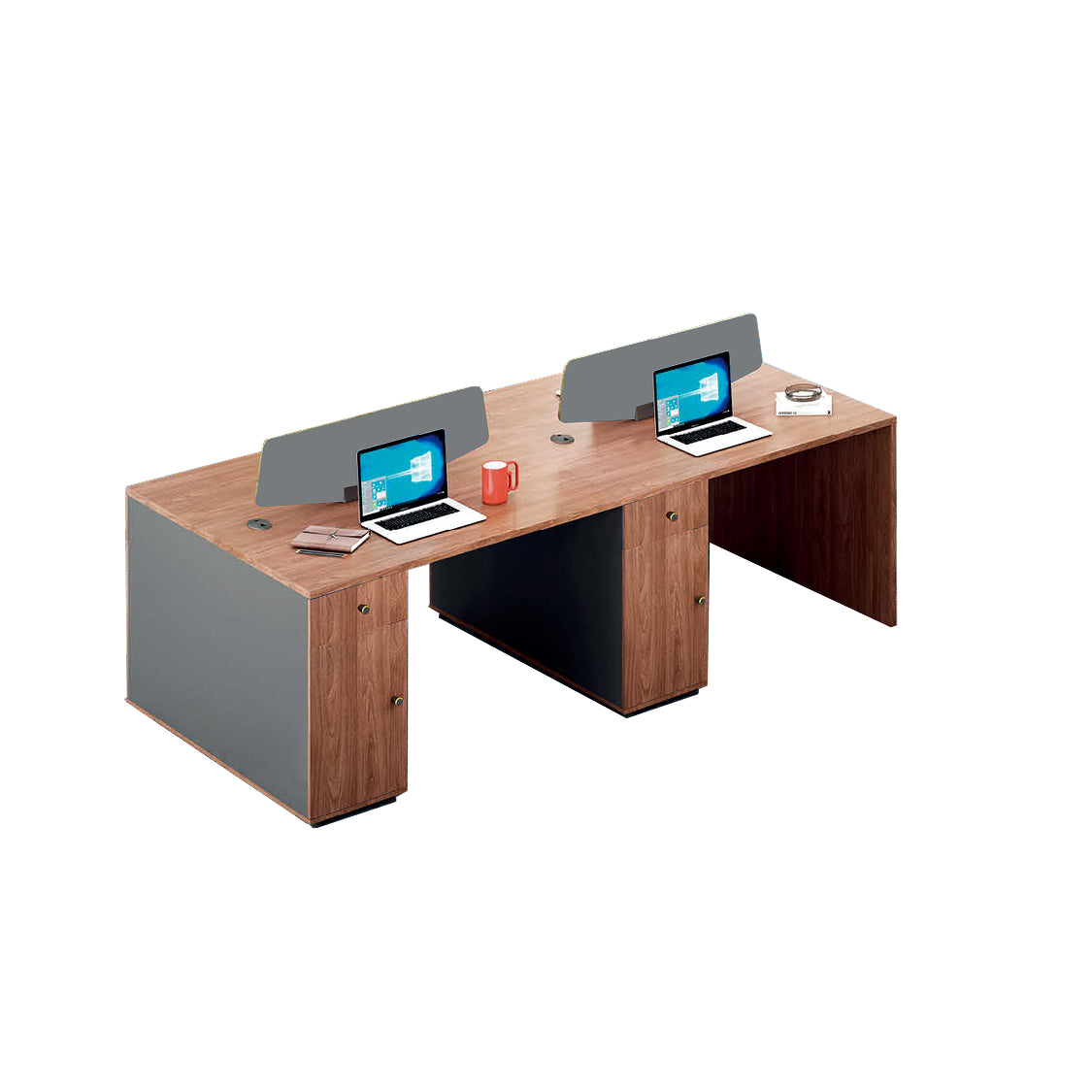
A home office setup in a Dubai apartment is about carving out a work zone in limited space and keeping it separate from home life. The furniture has to be compact, the layout uses dead corners, and the setup switches off at day's end. This guide covers small-space ideas.
Key takeaways
- Define a dedicated work zone — even a corner — so work and home stay mentally separate.
- Choose compact furniture: a 1200 mm desk and a proper chair fit most apartment corners.
- Use dead space — a corner, an alcove, a wall — rather than the middle of a room.
- Prioritise the chair and desk; keep the rest minimal so the space does not feel cramped.
- Make the setup switch off at day's end so the apartment feels like home again.
Carving out a work zone in a small apartment
The first challenge in an apartment home office is not furniture — it is defining where work happens. Without a dedicated zone, work spreads across the sofa and the kitchen table, and it never really stops. Even in a small apartment, marking out a specific spot for work — a corner, an alcove, a section of wall — creates the separation that makes you productive when you are there and lets you switch off when you leave it.
The zone does not need a whole room. A desk and chair in a defined corner is enough to signal "this is where I work," which is most of the psychological benefit of a home office. The aim is a spot you go to for work and step away from afterward, so the apartment does not become one blurred live-work space. Start by choosing that spot, then fit compact furniture to it.
Choosing compact furniture that fits
Apartment furniture has to earn its footprint. For the desk, a compact 1200 mm × 600 mm model suits most corners and gives enough surface for laptop work, while keeping the floor space a small apartment cannot spare. For the chair, do not compromise on support to save space — a proper chair matters as much in an apartment as anywhere — but a chair without bulky fixed arms tucks under the desk and takes less room.
The principle is to buy the smallest furniture that still works properly, not the smallest available. A desk too shallow for your monitor or a chair with no support saves space at the cost of the setup being unusable. Aim for compact-but-functional: enough desk depth for your screen, real support in the chair, and a footprint that leaves room to sit and move. You can shop desks in compact sizes suited to apartment corners.
Using dead space
The best apartment home offices use space that was doing nothing. A corner is the classic choice — it uses two walls and intrudes least into the room. An alcove or a recess can hold a desk that sits almost flush. A section of wall in a bedroom, living room or hallway can take a slim desk without blocking circulation. Looking for dead space, rather than clearing prime floor area, is how you fit a work zone into an apartment without losing the room to it.
Vertical space helps too. In a tight footprint, storage goes up rather than out — a shelf above the desk or a slim unit beside it keeps documents and equipment off the surface without taking floor space. The goal is a setup that occupies space the apartment was not really using, so the home office adds function without subtracting living space. A little planning of where the zone goes saves a lot of cramped compromise later.
Keeping work and home separate
An apartment home office works only if it switches off. When the desk is in your living space, the risk is that work never ends — the laptop is always there, in view, pulling you back. Building in a way to close down the setup at the end of the day is what protects both your evenings and your focus. That can be as simple as clearing the desk, closing the laptop into a drawer, or positioning the zone so it is out of direct sightline from where you relax.
This is the small-space version of the work-life boundary that a separate office gives automatically. In an apartment you have to create it deliberately, through where you place the zone and the habit of closing it down. Get that right and the apartment serves as both a productive workplace during the day and a home in the evening, rather than a permanent office you happen to live in. Our home office ergonomics guide covers getting the working setup itself right.
From the field: making an apartment work as an office
The apartment home offices that succeed share a pattern: a defined zone in dead space, compact-but-proper furniture, and a way to switch off. They pick a corner or alcove, fit a 1200 mm desk and a supportive chair that tucks away, put storage vertical, and build a habit of closing the setup down at day's end. The result is a real workplace that does not swallow the apartment.
The ones that struggle either skip the dedicated zone — so work bleeds across the whole home — or buy furniture too big for the space, so the apartment feels cramped and the setup gets resented. Both are avoided by the same discipline: define the zone first, choose the smallest furniture that still works, and keep it separable from home life. Done that way, even a small Dubai apartment makes a genuinely good home office. If you are setting up from scratch, our small home office guide walks through the whole process.
Apartment home office checklist
- Define a dedicated work zone — a corner or alcove is enough
- Use dead space, not prime floor area in the middle of a room
- Choose a compact desk (1200 × 600 mm) sized to the corner
- Keep a proper, supportive chair that tucks under the desk
- Put storage vertical to save floor space
- Build in a way to switch the setup off at day's end
FAQ
How do I set up a home office in a small apartment? Start by defining a dedicated work zone — even a corner or alcove is enough to separate work from home life. Use dead space rather than prime floor area, fit compact-but-proper furniture like a 1200 mm desk and a supportive chair, put storage vertical, and build in a way to switch the setup off at the end of the day so the apartment still feels like home.
What furniture fits a home office in an apartment? A compact 1200 mm × 600 mm desk suits most apartment corners and gives enough surface for laptop work without taking space you cannot spare. Pair it with a proper chair — do not compromise support to save room, but choose one that tucks under the desk. Put storage vertical, on a shelf or slim unit, rather than using floor space. Buy compact-but-functional, not just small.
Where should I put a desk in a small apartment? Use dead space the apartment was not really using: a corner (which uses two walls and intrudes least), an alcove or recess, or a section of wall in a bedroom, living room or hallway that a slim desk can take without blocking circulation. Avoid the middle of a room. Positioning the zone out of direct sightline from where you relax also helps you switch off.
How do I separate work and home in a studio or apartment? Create the boundary deliberately, since the space does not do it for you. Place the work zone out of your main line of sight from where you relax, and build a habit of closing the setup down at day's end — clear the desk, put the laptop away. That physical and habitual separation is what stops work bleeding into your evenings when the office is in your living space.
Do I still need a good chair in a small home office? Yes — space constraints do not change how long you sit. A proper chair with real support matters as much in an apartment as in a full office, because a poor one costs you comfort and back health over months of working. Choose a supportive chair that tucks under the desk to save room, but do not trade away the support itself to fit a smaller space.
Related guides
- Office Furniture Procurement Guide for the UAE
- Budget Home Office Under AED 2,000 UAE
- Home Office Desk Size Guide (UAE)
Set up your corner. Shop compact desks for an apartment, or read our small home office guide.