The ergonomic furniture market thrives on a simple trick: convincing buyers that every product is essential. Specialist keyboards, vertical mice, monitor lights, lumbar pillows, balance balls, anti-fatigue mats, blue-light glasses — the list is long and the marketing is loud.
In reality, four things move the needle. Everything else is optional, and most of it is unnecessary. Here is the practical version, written from the perspective of a furniture seller who would happily sell you the rest but knows what actually pays back.
The four things that matter
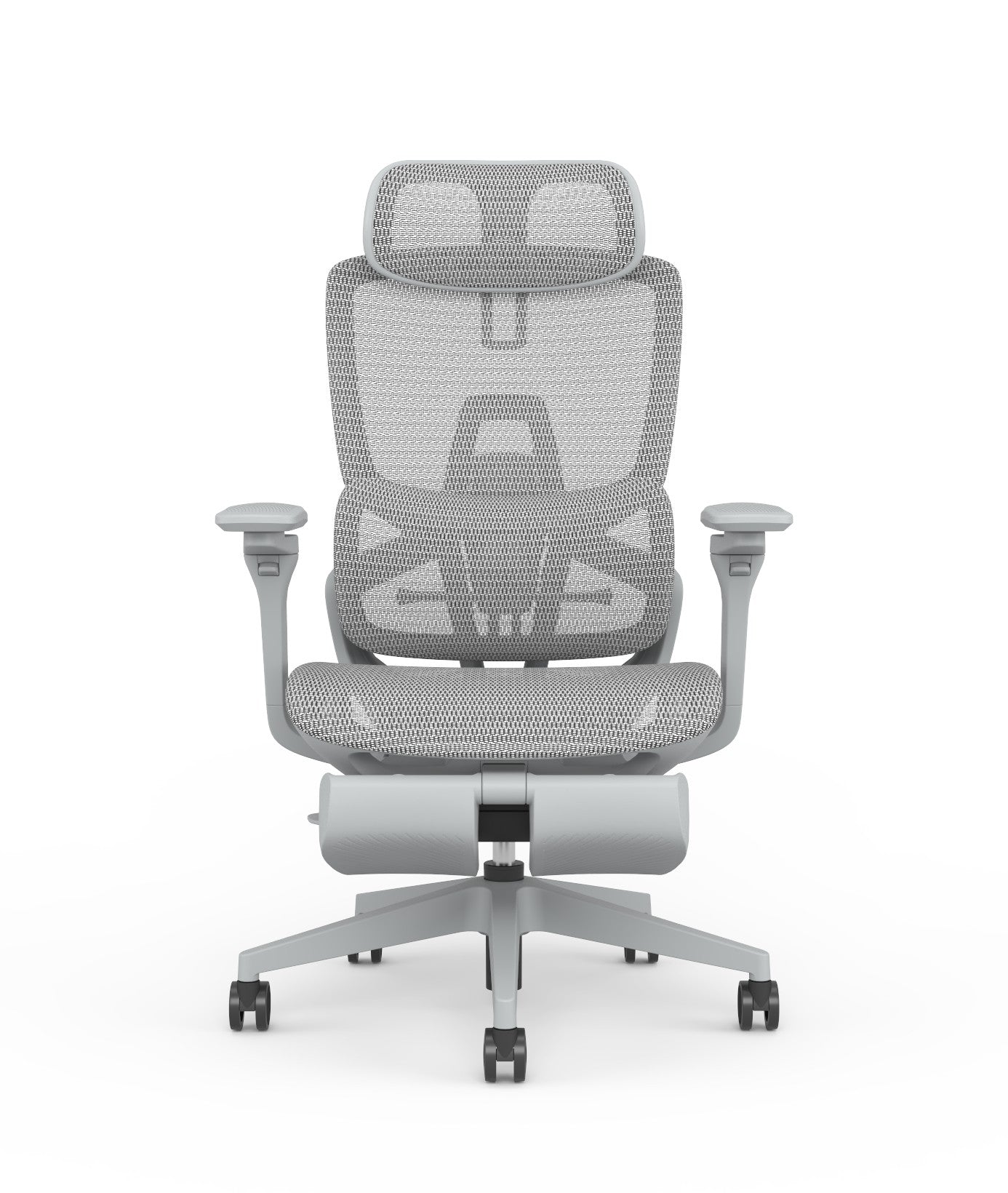
1. A chair you can sit in for eight hours. This is non-negotiable. A bad chair will quietly destroy your back over six months and you won't notice until it hurts. For a home office, AED 800–1,500 is the right band. Below this, build quality fails. Above this, you're paying for brand, not function. We covered the specifics in our office-chair buying guide. One sentence summary: synchro-tilt mechanism, BIFMA-rated cylinder, adjustable lumbar, multi-density foam seat.
2. Monitor at eye level. The top of your screen should be roughly level with your eyes when you're sitting upright. Most laptop setups put the screen 15–20 cm below this — that 15 cm of downward neck angle costs you a stiff trapezius muscle by Wednesday. Two fixes:
- External monitor + monitor arm. A 24–27" external screen on an adjustable arm is the cleanest solution. Arms run AED 250–600 in Dubai.
- Laptop stand + external keyboard. Cheaper. A laptop stand raises the screen; you add a separate keyboard and mouse to type at desk level.
The wrong fix is "I'll just sit up straighter." You'll forget within 20 minutes and never fix the actual problem.
3. Desk height that matches your elbows. When seated with your forearms parallel to the desk surface, your elbows should bend at roughly 90 degrees. Standard office desks are 72–75 cm tall — fine for users between 165 and 185 cm. Outside that range, you need either:
- A height-adjustable desk that goes lower (for short users) or higher (for tall users)
- A keyboard tray under a fixed-height desk to lower the typing surface
Sit-stand desks (adjustable-height range) solve this for any user automatically and add the standing benefit. Budget AED 1,500–3,500 for a quality electric sit-stand desk in Dubai.
4. Lighting from the side, not behind. Light behind your monitor causes contrast strain. Light directly above bounces off the screen. Side light (window to your left or right, lamp on the side of the desk) is correct. A AED 150 desk lamp with a swing arm solves this. A "smart bulb that adjusts colour temperature" does not.
What doesn't matter (despite what marketing says)
Treadmill desks for normal office workers. Treadmill desks work for people who already exercise and want to add slow-walking time. They don't work for typing — accuracy drops, hand fatigue rises. If you're choosing between a treadmill desk and a sit-stand desk, choose sit-stand. If you're considering both, you don't need either.
Vertical / ergonomic mice. These help wrist pain if you already have wrist pain. If you don't, they're an awkward learning curve solving a problem you don't have. Get a regular mouse with comfortable grip; revisit if pain appears.
Standing all day. Standing 8 hours a day is worse for you than sitting 8 hours a day. The point of a sit-stand desk is alternation — 30 minutes sitting, 30 minutes standing, throughout the day. People who buy sit-stand desks and stand all day end up with knee and lower-back pain by month three.
Lumbar pillows on top of a bad chair. If your chair lacks lumbar support, a pillow helps marginally. If your chair has built-in lumbar support, a pillow makes it worse. Fix the chair first.
Blue-light glasses, anti-glare screen protectors, balance balls. These solve marketing problems, not biomechanical ones. The evidence for each is thin or negative. Skip.
A working setup under AED 5,000
For a single home-office workstation in Dubai, a realistic complete spec:
| Item | Range | Notes |
|---|---|---|
| Ergonomic chair | AED 1,200 | Workstation chair, mesh-back, synchro-tilt |
| Sit-stand desk (140 cm) | AED 2,200 | Dual-motor, memory presets, 80 kg payload |
| Monitor arm | AED 400 | Single-arm, supports 24–32" screens |
| Desk lamp | AED 200 | Swing-arm, dimmable |
| Cable tray under desk | AED 150 | Keeps cables off the floor |
| Mobile pedestal (3 drawer) | AED 600 | Under-desk storage, lockable |
| Total | AED 4,750 |
This setup will last 5–7 years with daily use. The chair and desk dominate the cost because they should — they're the two pieces you interact with every minute of the working day.
If your budget is tighter (AED 3,000 cap), drop the sit-stand desk to a fixed-height regular desk (around AED 800) and keep the chair budget intact. Never compromise the chair.
Where to start
Browse our chairs catalogue, then adjustable desks. If you want a complete home-office package quoted as a bundle, contact our team and we'll spec it to your budget and room — email sales@treejartrading.ae or call +971 54 546 7851.
Bottom line: spend on chair, monitor arm, sit-stand desk, side lighting. Skip everything else marketed as "ergonomic." Five years of comfortable working comes from five things, not fifty.