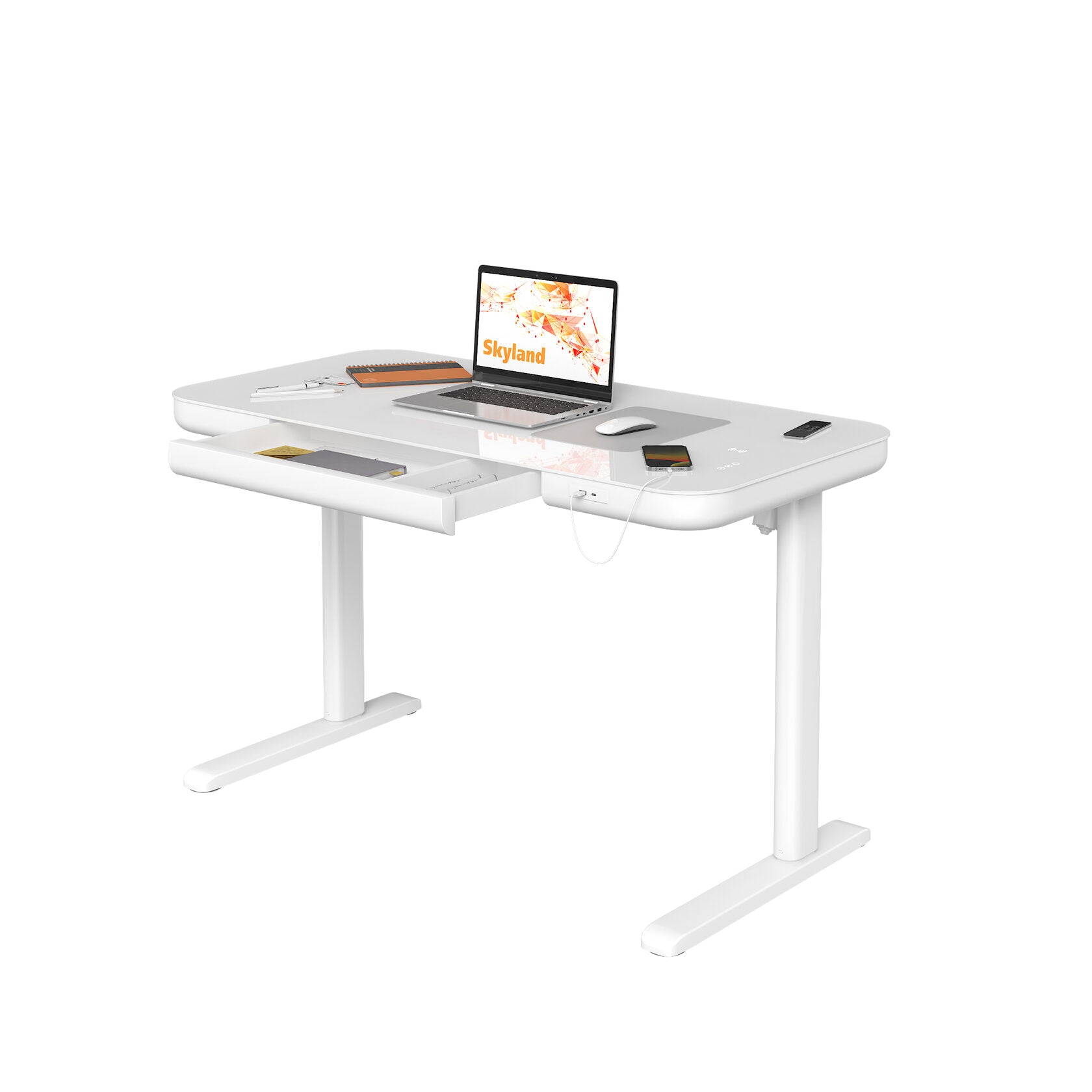
A budget home office under AED 2,000 is achievable in the UAE if you spend on the two things that matter — a decent chair and a proper desk — and save on the rest. The trick is knowing where a low price costs you nothing and where it costs your back.
Key takeaways
- Put most of the budget into the chair — it is the one piece where a low price costs you comfort.
- A decent chair and a proper desk are the two essentials; everything else is optional at first.
- You can save on the desk with a fixed-height model and on accessories without regret.
- Under AED 2,000 is realistic for a functional, comfortable setup — spend it deliberately, not evenly.
- Add extras (monitor arm, lamp, storage) later as budget allows.
What a budget home office actually needs
Strip a home office back to essentials and there are two: a chair you can sit in comfortably for hours, and a desk with enough surface at the right height. Everything else — storage, a monitor arm, a desk lamp, decor — is an upgrade you can add later. For a budget setup, buying only the two essentials well beats spreading the money thin across a long list.
The reason to focus is that a home office is where you work, and the working furniture decides whether that is comfortable. A cheap chair and a wobbly desk make every working day worse; a decent chair and a solid desk make it fine. Spend the budget on the two pieces that carry your working day, and the setup is genuinely comfortable even if it is not elaborate. You can shop desks and chairs to see what the budget buys.
Where to spend: the chair
If there is one rule for a budget home office, it is this: do not cheap out on the chair. You sit in it for hours, and a poor chair quietly costs you in comfort and, over months, in back ache. A comfortable working chair sits in a sensible band, and within a tight budget the chair is where the larger share should go.
What you are paying for is real lumbar support, a proper mechanism that lets you move, and a seat that holds its shape rather than flattening in a month. A chair that has those will serve you for years; a bottom-of-the-market chair will not, and you will buy again. On a budget, that makes a decent chair the better value even though it costs more up front — it is the purchase where spending a little more saves money and comfort over time.
Where to save: the desk and extras
The desk is where a budget home office can save without regret. A fixed-height desk costs less than a height-adjustable one and serves most people perfectly well — you only need adjustability if you are outside the standard height range or want to alternate sitting and standing. A simple, solid desk at the right 720–750 mm height, sized to your space, does the job for a fraction of a premium model.
The accessories are the other place to save at first. A monitor arm, a desk lamp, storage and decor all improve a setup, but none is essential on day one, and they can be added later as budget allows. Prioritise ruthlessly: chair first, desk second, extras when you can. Buying the desk sensibly and deferring the extras is what keeps a comfortable setup under AED 2,000 without compromising the pieces that matter.
A sample budget under AED 2,000
Here is how the priorities translate into a spend. The exact figures vary, but the shape holds: most of the money in the chair and desk, the rest deferred.
| Item | Priority | Notes |
|---|---|---|
| Office chair | Highest | The one piece not to cut — real support, a proper mechanism |
| Desk | High | Fixed-height, solid, sized to your space |
| Monitor arm | Optional | High value for screen work; add when you can |
| Desk lamp | Optional | Side lighting reduces eye strain |
| Storage | Optional | Add as the setup grows |
Work down the list, not across it. Buy the chair and desk well, and add the optional items over time. That order gets you a comfortable, functional home office within budget on day one, and a more complete one later without a big single outlay.
From the field: spending a small budget well
The people who build a good budget home office are disciplined about the order of spend. They put the largest share into a chair with real support, buy a sensible fixed-height desk sized to their space, and defer the monitor arm, lamp and storage until later. The result is a setup that is genuinely comfortable to work in from day one, even though it was not expensive.
The common mistake is spreading a small budget evenly — a cheap chair, a cheap desk, and a handful of accessories — which produces a setup that looks complete but is uncomfortable where it counts. Within months the cheap chair is replaced, so the "saving" was false. Spend a budget home office deliberately: protect the chair, buy the desk sensibly, add extras later. Done that way, under AED 2,000 buys a home office you can actually work in. Our home office setup guide covers getting the ergonomics right on any budget.
Budget home office checklist
- Put the largest share of the budget into the chair
- Choose a chair with real lumbar support and a proper mechanism
- Buy a solid fixed-height desk sized to your space
- Skip the height-adjustable desk unless you need it
- Defer monitor arm, lamp and storage to add later
- Spend by priority, not evenly across a long list
FAQ
Can you build a good home office for under AED 2,000? Yes. A budget home office under AED 2,000 is realistic if you spend deliberately: put most of the budget into a comfortable chair with real support, buy a solid fixed-height desk sized to your space, and defer accessories like a monitor arm and lamp until later. The key is prioritising the two essentials rather than spreading the money thinly across a long list.
What should I prioritise in a budget home office? The chair, then the desk. You sit in the chair for hours, so a low price there costs you comfort and, over months, back ache — put the largest share of the budget into a chair with real lumbar support and a proper mechanism. Then a sensible fixed-height desk. Accessories like a monitor arm, lamp and storage can be added later as budget allows.
Where can I save money on a home office setup? On the desk and the accessories. A fixed-height desk costs less than a height-adjustable one and suits most people; you only need adjustability if you are outside the standard height range or want to alternate sitting and standing. Accessories — monitor arm, lamp, storage — are not essential on day one and can be added over time without affecting the core comfort.
Is a cheap office chair a false economy? Usually, yes. A bottom-of-the-market chair often lacks real support and a durable seat, so it becomes uncomfortable within months and gets replaced — you pay twice and sit worse in between. On a budget, a decent chair with proper support is the better value even though it costs more up front, because it lasts and keeps you comfortable through long working days.
Do I need a height-adjustable desk for a home office? Not for a budget setup, in most cases. A fixed-height desk at the standard 720–750 mm suits users roughly 165–185 cm tall and serves most people well for less money. A sit-stand desk is worth it if you are outside that height range or want to stand part of the day — but it is an upgrade, not a budget essential.
Related guides
- Office Furniture Procurement Guide for the UAE
- Home Office Desk Size Guide (UAE)
- Home Office Setup in a Dubai Apartment
Build it on budget. Shop desks and chairs for a home office, or read the home office ergonomics guide.