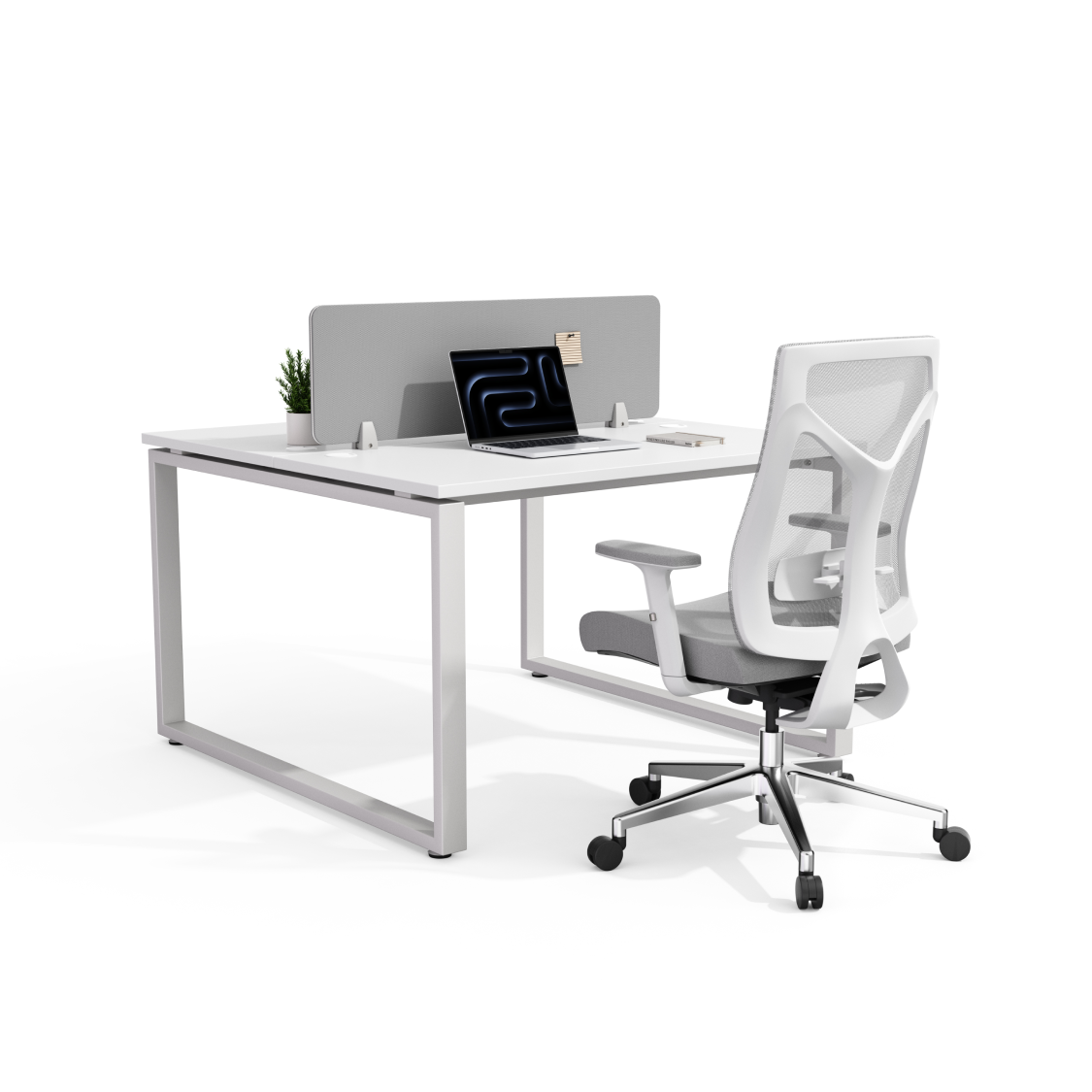
MFC, HPL and veneer are the three surfaces most office furniture is built from, and in the UAE climate the choice is really about how each handles humidity, wear and cost. MFC is the cost-effective default; HPL is tougher for heavy use; veneer is premium but needs care.
Key takeaways
- MFC (melamine-faced chipboard) is durable, moisture-resistant and cost-effective — the practical default for most offices.
- HPL (high-pressure laminate) is tougher and more wear- and moisture-resistant, worth it for heavy-use surfaces.
- Veneer gives a real-wood premium look but is more sensitive to humidity and needs quality construction.
- In the UAE, edge-banding quality matters as much as the surface — poorly sealed edges are where humidity damage starts.
- Match the material to the use: MFC for general furniture, HPL for hard-worked surfaces, veneer where looks lead.
What are MFC, HPL, melamine and veneer?
These terms describe the surface of a panel, and they are often confused. In plain terms:
- Melamine / MFC: a chipboard or MDF core faced with a melamine-impregnated decorative paper, fused under heat and pressure. "Melamine-faced chipboard" (MFC) is the common office version. Durable, moisture-resistant and economical.
- HPL (high-pressure laminate): multiple layers of resin-impregnated paper pressed at high pressure into a hard laminate sheet, then bonded to a core. Tougher and more resistant to wear, heat and moisture than basic melamine.
- Veneer: a thin layer of real wood bonded to a core, then finished. It is genuine timber on the surface, giving the most premium look, but it behaves more like solid wood — sensitive to humidity and needing care.
The core underneath (chipboard or MDF) matters too, but the surface is what you see and touch, and what largely determines how the piece handles daily office use and the local climate.
MFC: the practical default
MFC is the material most office furniture is made from, for good reasons. It is durable enough for everyday desks, storage and workstations, resists moisture reasonably well, comes in a wide range of finishes, and is cost-effective at scale. For the bulk of an office — the general desks and cabinets that just need to work and last — MFC is usually the right call.
Its limits are worth knowing. Basic melamine is less tough than HPL against heavy abrasion and impact, and like any panel product it depends on good edge-banding to keep moisture out. But for standard office use in the UAE, a well-made MFC piece with quality edging performs well and keeps the budget sensible. When people say office furniture is "melamine," this is what they mean, and it is a sound default rather than a compromise for most of an office. You can browse the catalogue to see MFC pieces across the range.
HPL: tougher for hard-worked surfaces
HPL costs more than basic melamine, and it earns it on surfaces that take heavy use. Because it is built from many resin-impregnated layers pressed at high pressure, it resists scratches, heat, impact and moisture better than melamine facing. On a busy meeting table, a reception counter, or any surface that gets constant contact and cleaning, HPL stays looking good longer.
The decision is about where the wear is. It rarely makes sense to specify HPL across an entire office, but it makes a lot of sense on the hardest-worked surfaces, where the extra toughness pays back in a longer life and a better-looking piece for years. Think of HPL as the upgrade you apply selectively — to the surfaces that get punished — rather than a blanket choice, and it delivers value without inflating the whole furniture budget.
Veneer: premium looks, more care
Veneer is where office furniture goes when appearance leads — executive desks, boardroom tables, senior offices. Because the surface is real wood, it has a depth and warmth that laminates imitate but do not match, and for a space that represents the business it can be the right choice. The trade-off is behaviour: veneer is more sensitive to humidity and handling than MFC or HPL, and it needs quality construction and finishing to last.
In the UAE climate, that sensitivity matters. A well-made veneer piece with proper sealing and finishing holds up and looks superb; a poorly made one can suffer in local humidity. So veneer is worth it where the look justifies the care and the construction is good — a flagship executive desk, a boardroom table — rather than for general office furniture that just needs to be hard-wearing. Match veneer to the pieces where its premium look does real work.
A note on the core
The surface gets the attention, but the core underneath carries the strength and affects how the piece handles moisture. Most office panels use a chipboard (particleboard) core, which is economical and stable; some use MDF, which is denser and gives a smoother edge profile for shaped or painted pieces. Neither is inherently "better" — what matters is that the core is a quality board and, crucially, that it is sealed at every edge and cut-out. An exposed or poorly sealed core edge is the weak point in any panel, whatever the surface on top, and it is the first place UAE humidity will find its way in. When you assess a piece, look at how the core is finished where the surface stops.
The comparison, and why edges matter
Here is the practical comparison for a UAE office.
| Material | Durability | Moisture resistance | Look | Cost | Best for |
|---|---|---|---|---|---|
| MFC / melamine | Good | Good | Wide range | Low | General office furniture |
| HPL | High | High | Wide range | Medium | Hard-worked surfaces |
| Veneer | Moderate | Lower | Premium (real wood) | Higher | Executive/boardroom |
The through-line the table cannot fully show is that edge-banding quality matters as much as the surface, especially in the UAE. A panel is only sealed if its edges are, and poorly finished edges let humidity into the core, which is where swelling and lifting begin. A quality MFC piece with good edge-banding can outlast a poorly edged one made of a nominally better surface. When you specify material, specify the edging too, and check it on samples — the surface sells the piece, but the edge decides how long it survives.
The UAE angle: specifying for humidity and use
In the UAE, humidity and heat are the environmental factors that decide furniture longevity, so material specification is partly a climate decision. The safe general approach is moisture-resistant materials — MFC or HPL — for the bulk of an office, with quality edge-banding throughout, and veneer reserved for the flagship pieces where its look justifies the extra care. That balance gets durability where the office needs it and premium appearance where it shows.
The cost angle reinforces the same choices. MFC for general furniture keeps the budget sensible; HPL selectively on hard-worked surfaces spends money where wear justifies it; veneer on a few statement pieces spends on appearance where appearance matters. Specifying material by use, rather than picking one grade for everything, gets a better office for the same money — and requesting samples before a large order lets you check both the finish and the edging in person. You can request material samples to compare before committing.
From the field: matching material to the piece
The offices that specify materials well match the material to the job of each piece rather than choosing one grade throughout. General desks and storage in MFC, hard-worked surfaces like meeting tables and reception in HPL, and the executive or boardroom pieces in veneer — each material where its strengths pay off. The result is durable where it needs to be, premium where it shows, and sensibly priced overall.
The common mistake is choosing on headline material name alone — assuming "veneer" is always better and "melamine" always cheap-and-nasty. In practice a quality MFC piece with good edging beats a poorly made veneer one for durability, and specifying premium veneer across general furniture wastes money on care-heavy surfaces that just need to be hard-wearing. Specify by use, insist on good edge-banding for the climate, and check samples before a bulk order. That approach gets the material decision right for a UAE office every time.
Office furniture material checklist
- MFC for general desks, storage and workstations
- HPL for hard-worked surfaces (meeting tables, reception)
- Veneer reserved for executive and boardroom pieces
- Quality edge-banding specified throughout — critical for humidity
- Moisture-resistant materials prioritised for the UAE climate
- Material matched to each piece's use, not one grade for all
- Samples requested to check finish and edging before a bulk order
FAQ
What is the difference between MFC and HPL? MFC (melamine-faced chipboard) is a core faced with melamine decorative paper — durable, moisture-resistant and cost-effective, the default for general office furniture. HPL (high-pressure laminate) is built from many resin layers pressed at high pressure, making it tougher and more resistant to wear, heat and moisture. HPL costs more and is worth it on hard-worked surfaces; MFC suits the bulk of an office.
Which office furniture material is best for the UAE climate? For most of an office, moisture-resistant MFC or the tougher HPL, both with quality edge-banding, handle UAE humidity well. Veneer looks the most premium but is more sensitive to humidity and needs quality construction, so reserve it for executive or boardroom pieces. Whatever the surface, the edge-banding matters most, because poorly sealed edges are where humidity damage starts.
Is veneer better than melamine for office furniture? Not always. Veneer has a real-wood premium look that suits executive and boardroom pieces, but it is more sensitive to humidity and handling and needs quality construction. For general office furniture that just needs to be hard-wearing, a quality MFC (melamine) piece with good edging is more practical and durable. Choose veneer where looks lead, MFC where durability and value do.
Why does edge-banding matter for office furniture? Because a panel is only sealed if its edges are. Poorly finished edges let humidity into the core, which is where swelling and lifting begin — especially in the UAE climate. Quality edge-banding resists this, so a well-edged MFC piece can outlast a poorly edged piece made of a nominally better surface. Always specify and check the edging, not just the surface material.
Should I use one material for the whole office? Usually not. Match the material to each piece's use: MFC for general desks and storage, HPL for hard-worked surfaces like meeting tables and reception, and veneer for executive or boardroom pieces where appearance leads. Specifying by use gets durability where it is needed and premium looks where they show, for a better office at the same overall cost.
Related guides
- Office Furniture Procurement Guide for the UAE
- Office Furniture Sustainability Certifications
- Office Furniture Warranty & After-Sales UAE
Specify the right material. Request material samples to compare MFC, HPL and veneer, or browse the catalogue to see them in real pieces.